
American Farmland Trust posts action plan to help Puget Sound farmers

Farmer survey showed that rising labor and input costs, market volatility, climate instability, and the high costs of compliance with state, local, and federal laws have eroded the financial and emotional resilience of farmers who sustain local food systems and steward its natural resources. 
American Farmland Trust posts action plan to help Puget Sound farmers
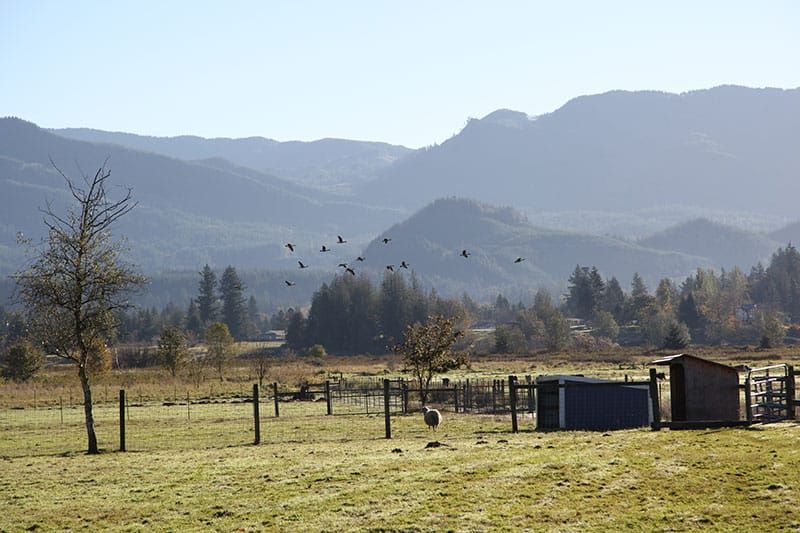
American Farmland Trust released a 14-page action plan to help farmers in the Puget Sound region. (Photo courtesy of the American Farmland Trust).

American Farmland Trust released an action plan to help farmers become more economically secure, protect agriculture land, and improve environmental health and community well-being. 

“This Puget Sound region stands at a critical moment, and this plan is urgent,” said AFT Pacific Northwest Regional Director Addie Candib in a press release. “Without immediate, united action, we risk losing the farmland, farmers, and natural resources that sustain our communities. The strategies in this plan are not long-term aspirations — they are urgent priorities that demand bold leadership and decisive investment now. Protecting irreplaceable working lands, strengthening farmer livelihoods, expanding equitable land access, preparing for climate extremes, and supporting the health and wellbeing of those who feed our region cannot wait.” 

The goals of the 14-page plan include 1) protecting farmland from conversion to development; 2) improving farmer livelihoods and business viability; 3) increasing access to farmland, markets, infrastructure, and technical assistance; 4) building resilience to climate change and natural disasters; and 5) supporting producer health and wellbeing.  

With the Puget Sound Partnership providing funding, the action plan is based on a 2024 survey of former, current and aspiring farmers in the Puget Sound region. 

Survey findings showed that rising labor and input costs, market volatility, climate instability, and the high costs of compliance with state, local, and federal laws have eroded the financial and emotional resilience of farmers who sustain local food systems and steward its natural resources. 

“When we do a farmer survey, we learned a lot about how much farmers are struggling, we thought we’d call it out,” Candib said in a follow-up interview. “When we focus too much on business, we lose too much on the holistic aspect.”

(Photo courtesy of American Farmland Trust)

The next step is to work with the Puget Sound Partnership to develop progress indicators that addresses agriculture viability. Then parts of the plan will be pulled out to develop a tool kit for county organizations and county governments. “We see county governments as a driver for local action,” she added. 

The plan recommends that agencies, local governments, and nonprofit organizations work together to address systemic gaps across the agricultural community, including to coordinate strategies to promote water and soil stewardship practices; equitable and affordable land access programs; regional infrastructure and market investments; and support for health and wellbeing that recognize farmers as essential stewards of critical natural resources. 

She said the plan provides organizations, county officials and legislators an agenda if they want to help farmers. 

An advisory committee, composed of farmers, conservation districts, agricultural service providers, county planners, and state agencies shaped the action plan, and coordinated with other entities engaged in research about agricultural viability. AFT also combined an extensive literature review and stakeholder interviews with the findings from the farmer survey to develop the Agricultural Viability Action Plan for Puget Sound.  

“There’s no question that state agencies, local governments, conservation partners, and elected officials each have a critical role to play,” said Candib. “But lasting change is only possible if residents, consumers, and advocates also use their voices, purchasing power, and civic engagement to champion a future where farming remains viable and valued. Every policy decision, funding allocation, and community action taken today shapes whether the next generation will inherit a resilient agricultural landscape or the loss of an irreplaceable resource.”