Figuring out how to make tea thrive in Washington
Researchers at Mount Vernon Northwestern Washington Research are busy finding best conditions to help growers grow tea.
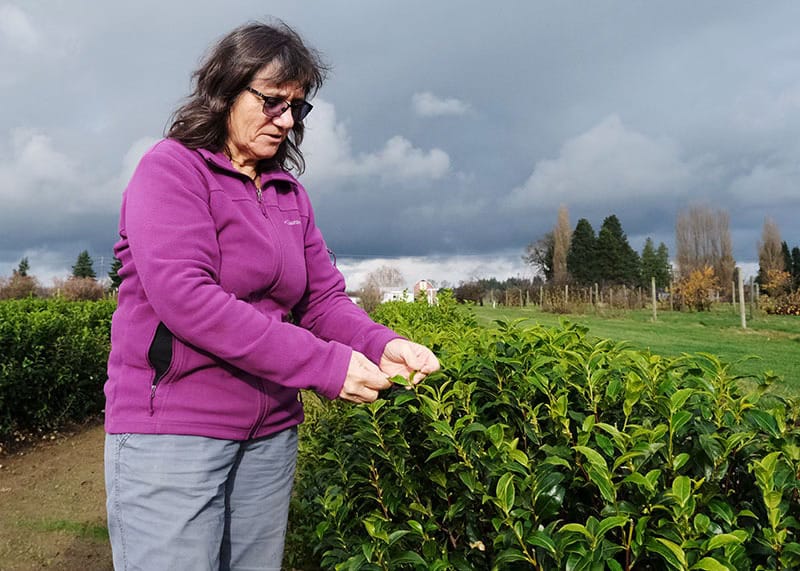

Researchers at Washington State University are working to figure out the conditions to allow tea to grow and thrive in the region.
Working out of the Mount Vernon Northwestern Washington Research and Extension Center, researchers have been working since 2019 growing tea plants. They collected 14 cultivars – from Mississippi State University, University of Hawaii, and one from Minto Island Tea Company in Salem Oregon.
“We have a very mild climate and that is to our advantage,” said Carol Miles, professor in horticulture working at WSU’s extension center in Mount Vernon. She added tea plants need a low soil pH similar to blueberries.
She added that the opportunity is to produce a value-added product on a local level, but a farmer couldn’t afford the hand picking needed to harvest on a volume scale.
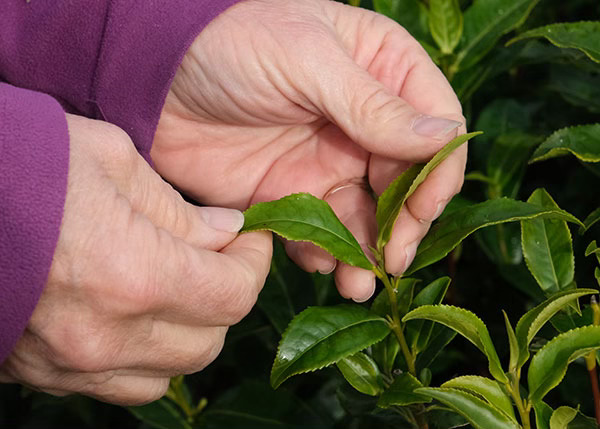
Miles said a farm in Skagit County grew tea until 2021 and a small farm on Orcas Island is also growing a small number of plants. Minto Island Tea Company, based in Salem, Ore., has been growing tea for decades.
“It was originally established in the 1980s as a genetics project to establish tea plant varieties for the Pacific Northwest,” said Gavin McFarlane, tea project manager at Minto Island Tea Company. The farm has about 1-and-a-half acres used for tea production.
Nationally, tea is grown in South Carolina, Hawaii, Alabama, and Oregon.
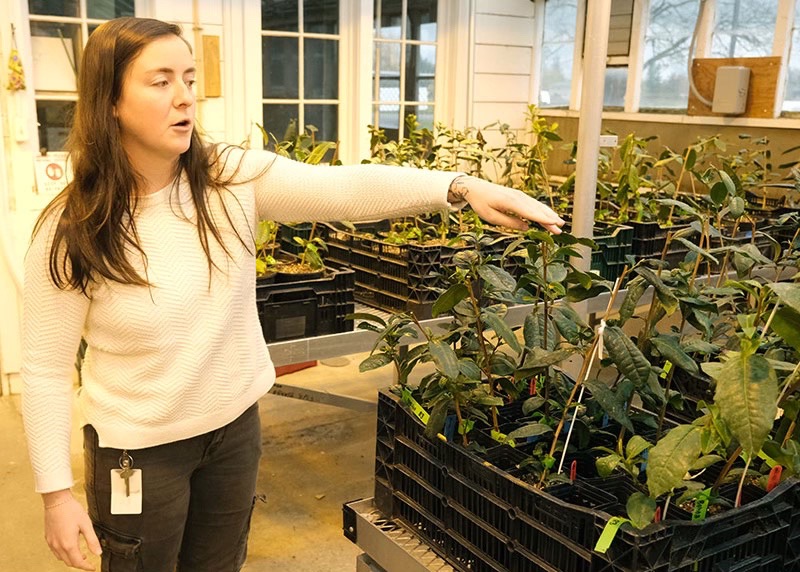
McKenzie Shelton, a graduate research assistant for Washington State University, spoke during the Snohomish County Focus on Farming conference in November, highlighted the advantages and challenges to growing tea in the region.
Tea is time consuming. It takes seven years of growth to get a profitable harvest, and it is cheaper to import tea, she said.
Tea grows in a mild Mediterranean climate, and growers would benefit from the region’s vibrant agritourism, emphasis on locally produced goods and hot beverage niche, according to a presentation given at the conference.
McFarlane said the climate in the Pacific Northwest is generally a good climate for tea. He noted some challenges. The wet and dry season in the Pacific Northwest is opposite of other tea growing regions, which have wet summers. He said an arid summer presents a challenge. Water management is important.
“Tea is a type of Camelia, and it really doesn’t like wet feet,” McFarlane said. Other challenges include voles, cold, wet soil pathogens.
He also echoed Miles’s comments. The biggest challenge is the cost of labor harvesting tea.
Tea is also fun to have as a crop, McFarlane said and the same tea leave can be harvested and transferred into different varieties. “It’s a bit of a puzzle to decide what to make.”
“The potential here is for home garden tea,” Miles said. Tea plants from the research program are being supplied to farmers and nurseries.
The Mount Vernon Northwestern Washington Research and Extension Center has developed resources to help growers learn about tea.
The website, vegetables.wsu.edu/tea/, has fact sheets about propagation protocol, mist chamber construction, planting and establishment, can care and maintenance. Also, the NWREC has information about tea tasting as well as information about home processing black and green teas.
“Realistically you can buy any tea plant from a grower and follow our propagation procedures,” Miles said.