
From soil health to wildfire prevention – biochar provides options for farmers
Pierce, Whatcom and Skagit conservation districts offer biochar education programs.
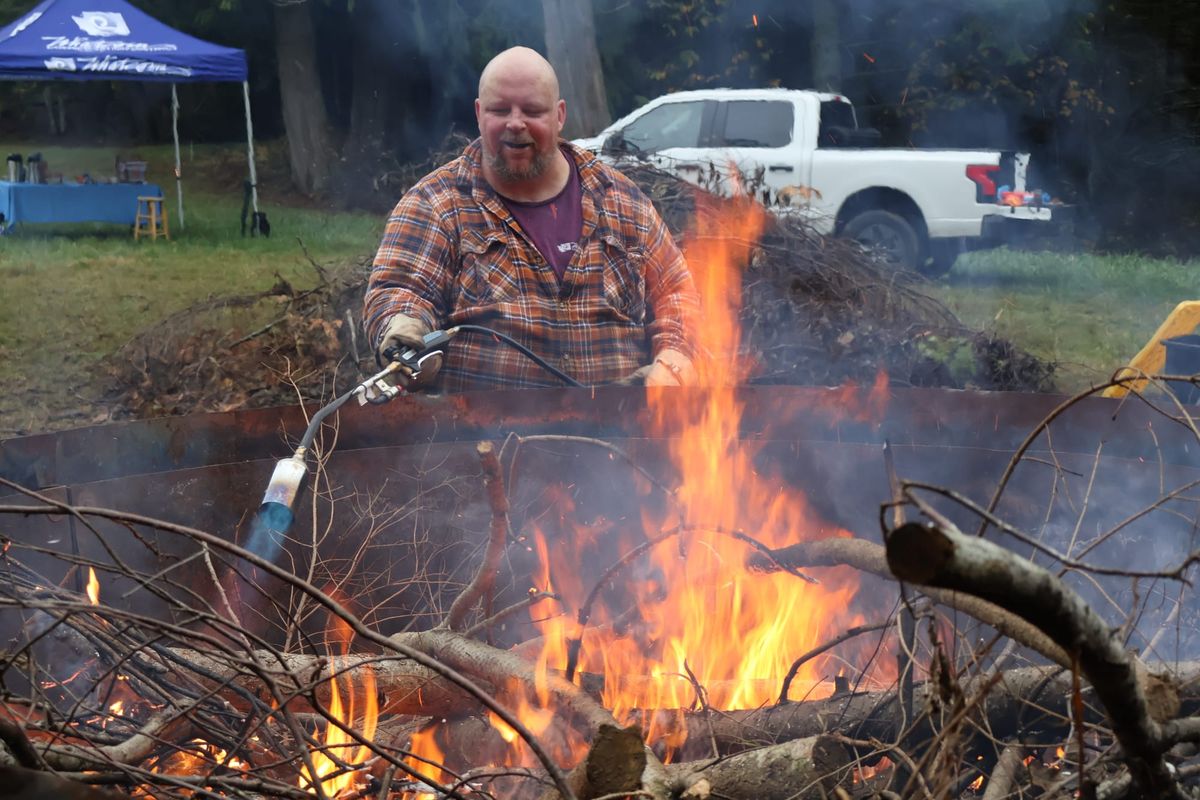
Michael DeGolyer of Five Elements Harvest located near Custer is using loose branches, prunings and other debris to transform it into material that improves growing conditions on his farm.
He is producing biochar. He uses a flame-cap kiln that burns materials in a low-oxygen environment using a process known as pyrolysis.
“We’re getting a very heavy blossoming and a very heavy fruit set,” DeGolyer said. He grows peaches, plums, apricots, pears, grapes, apples, tomatoes and a variety of other fruit and vegetables on his 10-acre farm located near the Canadian border.
He combines biochar with his compost to use as a soil amendment, help fight fungus, and help reduce the water consumption in his greenhouse.
Biochar has seen more use since legislation approved in 2024 allowed for the use of flame cap kilns.
Research local regulations before considering use of a flame cap kiln.
Clare Duncan McCahill, owner of Perigee Farm in Elbe, bought a biochar kiln that is six feet in diameter and three feet tall. “We were really surprised at how much material the biochar kiln contains.”
She said the material produced helps improve the sandy soil that is on Perigee Farm, which grows cut flowers, herbs and perennials on six acres.
Conservation Districts in Pierce, Whatcom, and Skagit counties have a biochar program that trains property owners how to use flame-cap kilns to produce the material.
Using branches and other debris will help protect properties against wildfires.
“We want to get fuel off people’s property,” said James Moore, climate resilience manager with the Pierce Conservation District. He said people otherwise would have to travel 25-50 miles to the nearest service center to dispose of materials.
The Pierce Conservation District has several demonstration burns scheduled to teach people about producing biochar. The first takes place May 9 in Buckley and the second two take place May 14 and May 15 at the Farm at Franklin Pierce Schools. Click here for more information.
Moore cited several advantages biochar has for farmers. It can be used as a soil amendment; it can help keep water in the soil. The material can also be added to compost and a home for microbes, a manure deodorizer, and can help with rain gardens. He added a lot of evidence with biochar needs to be corroborated.
Whatcom Conservation District works with landowners to develop a risk assessment on a property and if the fuel on the property can be converted into biochar. The district has conducted several burns in Whatcom and Skagit counties.
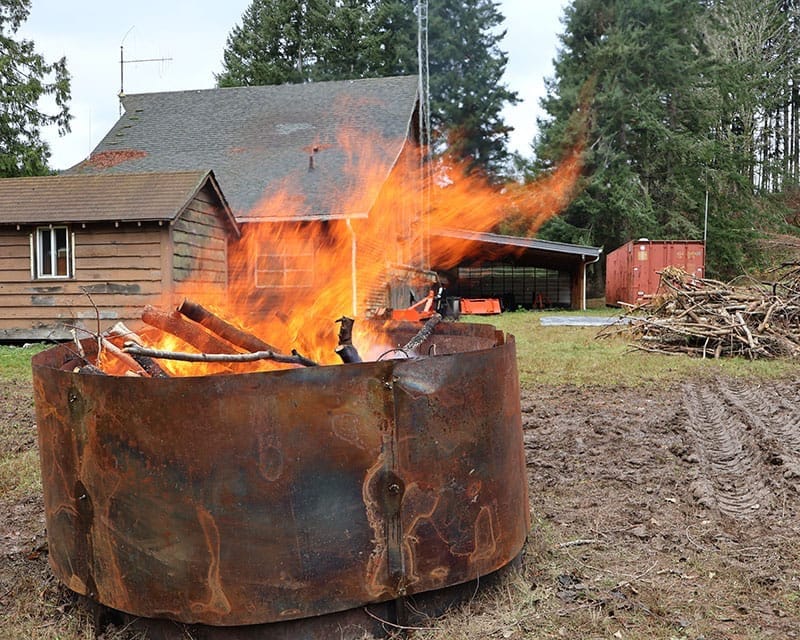
Skagit County offers a biochar kiln on a loan basis while Pierce Conservation District offers a rental. People attend and participate in a demonstration burn and show they can safely conduct a burn, said Robert Walters, community wildfire resilience specialist for the Whatcom Conservation District.
Walters said materials burned in a kiln include branches, smaller and dying trees and such plants as Hawthorn or Holly. “We’re also performing a service to landowners by converting it into something that is nonflammable.”
He explained the kiln has a low effect on air quality because the only visible smoke occurs at startup.
Whatcom Conservation District uses a four-foot tall, six-section modular kiln that can be transported in the back of a Subaru Outback. When assembled dirt is packed in the bottom to prevent oxygen from seeping in, Walters said. Moore added it takes three people about 20 minutes
Material is densely packed into the kiln, ignited from the top and burns down. “When it gets going, the stuff falls in on itself.”
He added that 20 yards worth of material takes around four-and-a-half hours to become biochar.
People noted several of the challenges producing biochar. DeGolyer said it’s an involved process to get a kiln bought and going and noted how much wood the kiln takes. Duncan McCahill said a lot of water is needed to extinguish the burn.
Moore said the process still releases particulates and carbon dioxide in the air, but notes the process still captures carbon.
“The whole point of it is to be more wildfire prepared and help out our soil,” Moore said.