USDA cuts nearly $5 million that would've helped underserved farmers in western Washington
King County and Viva Farms was scheduled to receive funding from the Increasing Land Access, which was supposed to fund $300 million for 50 projects across 40 states. USDA announced elimination in March.
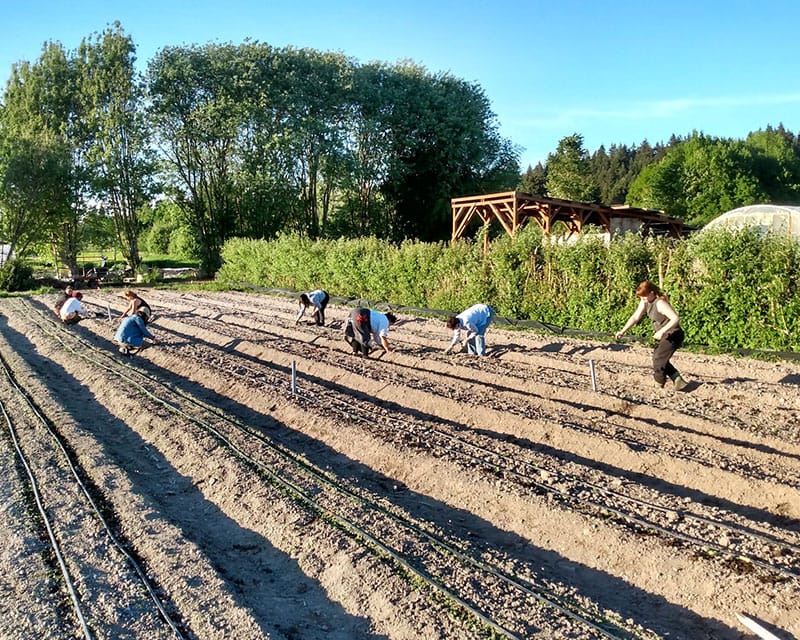
Two entities in western Washington are scrambling after learning a U.S. Department of Agriculture grant program that provided nearly $5 million in funding to help underserved farmers is being eliminated.
Viva Farms, a farm-business incubator and training program in western Washington, and King County, which owns and operates several farms as well as the Farmland Access Program, learned in March the USDA’s Increasing Land Access (ILA) grant is terminated.
“We were ready to press play on our ILA grant and loan programs to support land acquisition for farmers ready to become fully independent and move onto their own land,” said Viva Farms’ Director of Farm Viability, Ann Chotzen in a press release. “Further, helping farmers launch from the incubator makes room for our newest farms to grow. Losing the ILA funds doesn’t mean the land and capital access barriers go away. All of this could also mean less organic food grown here and enjoyed here.”
The grant was designed to expand land access for underserved farmers, including beginning farmers, immigrants, refugees, and farmers of color, said Doug Williams, spokesperson for King County in an email. Participating farmers rely on not only access to land, but also on technical assistance, infrastructure and community connections.
King County’s grant totaled $2,499,984 that would be disbursed between 2024 to 2028. King County learned about the reward in 2023, and the contract was finalized in 2024.
Without the grant funding, farmers may face reduced access to land, diminished support services and increased barriers to sustaining their operations, he explained.
The grant elimination will affect farmers on several King County-owned farms, including 30-acre Horseneck Farm near Kent, which is dedicated to increasing diversity in the local food system. Williams said the grant was foundational to the county’s Farmland Access Program, which supports establishment and farm businesses operated by beginning, BIPOC, and other historically underserved farmers.
The Increasing Land, Capital, and Market Access Program awarded around $300 million for 50 projects in 40 states, Washington DC, Puerto Rico and U.S. Virgin Islands to help underserved producers by increasing land, capital and market access, according to the Increasing Land, Capital and Market Access Program website.
A spokesperson for USDA said the program permitted the abuse of federal funds including the expenditures of purchasing a barbecue smoker, construction of a gazebo, massages, and, for one recipient, a $20,000 budget for ink pens. The ILA Program included no minimum requirement for direct producer support
“Over the past year, USDA has worked to clean up the mess left for us by the last Administration. To no surprise, a peek behind the curtain of this Biden-era program revealed the egregious misuse of taxpayer dollars to the tune of nearly $300 million,” the spokesperson said in an email.
The spokesperson provided examples: a barbecue smoker ($20,000), massages for farmers ($20,000), RV ($110,000), drones ($27,000), refreshments ($112,500) and office supplies ($130,355).
Viva Farms noted most of the $2.5 million grant was for direct distribution to beginning farmers, who have built successful, family-owned farm businesses growing food for the community.
“Our program was excited about the ILA grant Viva was awarded because of the potential to provide life-changing positive impact for next generation farmers who have faced barriers to land access.”
For King County, the loss of nearly $600,000 per year in funding would have supported program staff, contractors, nonprofit partners and farm management.
Williams said King County’s ability to manage around 250 acres of publicly owned farmland is severely affected. The loss of funding impacts onboarding of new farmland leaseholders; ensuring compliance with lease terms; County code, and state and federal regulations; maintaining site infrastructure; providing technical assistance, and helping farmers identify and acquire farmland.
The grant cancellation also constrains King County’s ability to advance long-term farmland access projects, finding “buy, protect, and sell” models to transition land to farmers who have not historically had access to ownership opportunities, enhancing the Farmland Preservation Program, and provide technical assistance to farmers.
Viva Farms will continue its work supporting people who aspire to make farming a financially viable livelihood and commit to feeding their communities.
“When finding like this falls through – especially on top of other missed opportunities – it doesn’t just slow things down. It changes what we’re able to do and how we move forward,” said Matthew and Giana Cioni of The Crows Farm.
The added, “even so, we remain committed to this path. We care deeply about continuing to grow food for our community and building somethings that’s meant to last. While this setback creates challenges, it also highlights how important it is to keep investing in farmers at this stage. With the right support, farms like ours can continue to grow and adapt as part of a more secure agriculture future.”