Washington works to open exports of red raspberries to South Korea
Washington Red Raspberry Commission seeks to resolve phytosanitary concerns. Received WSDA Specialty Crop Block to help fund technical assistance.
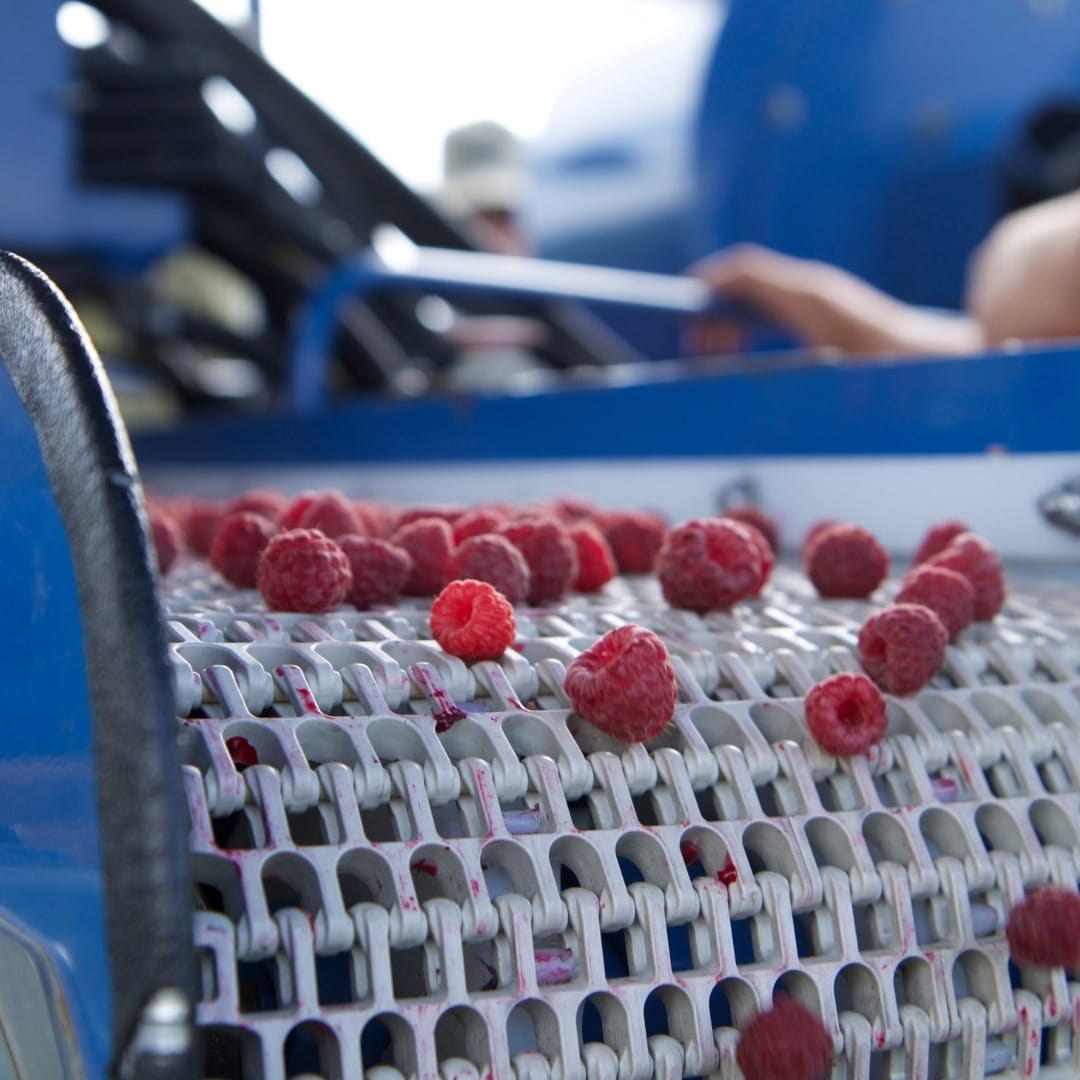

Washington’s frozen red raspberries can’t be exported to South Korea and growers in Washington are working to open access.
South Korea currently bans imports of raspberries and blackberries (caneberries) grown in the United States.
“Our understanding is that ban exists due to concern about fire blight, although there have never been any documented cases of fire blight in Rubus spp. in the Pacific Northwest,” said Gavin Willis, executive director of the Washington Red Raspberry Commission, in an email.
Willis said the goal is to gain access to the South Korean market and reach $1 million in exports by 2030. Frozen blueberries, for example, were valued at more than $21 million.
“The South Korean market in general has a high emphasis on health and healthy foods,” Willis said in a follow-up interview. He added the number of frozen blueberries to South Korea has increased and he hopes to see the same thing happens with red raspberries.
Fire blight is a disease that is also found in apples and pears and infections have occurred in Washington orchards over the years. Controlling fire blight is a significant expense for pome fruit (apple and pear) growers, according to research on the Washington State University Tree Fruit website. Willis noted South Korea has an apple industry.
Washington state grows more than 90 percent of the frozen red raspberry crop. Nearly 99 percent of Washington’s red raspberries is grown in Whatcom County, according to information from the state’s Red Raspberry Commission.
It looks like Washington had a strong red raspberry harvest in 2025. Willis said the state grew 68 million pounds of red raspberries, which is a 23 percent increase from 2024. He attributed the higher amount to an increase in yields and an increase in the acres being used to grow red raspberries.
Work to access South Korea has been going on for years. Willis said the state of Oregon started working on market access around a decade ago. The Animal and Plant Health Inspection Service at the United States Department of Agriculture formally submitted a request in 2020 for market access in South Korea for Washington and Oregon frozen raspberries and blackberries.
Willis was a member of a trade mission, comprised of agriculture officials and producers from Oregon and Washington, that traveled to South Korea during the summer 2025.
“We toured Korean supermarkets, met with importers and processors, and attended the Seoul Food and Hotel Show, all to gain insights on the Korean frozen berry market,” Willis said. He also joined a delegation from the USDA in meetings with officials from the South Korean Ministry of Food and Drug Safety to learn about import requirements and inspection protocols.
To help resolve phytosanitary issues, the Washington State Department of Agriculture awarded the Washington Red Raspberry Commission a $242,000 Specialty Crop Block Grant.
The grant will allow the Red Raspberry Commission to retain technical specialists with experience in South Korean phytosanitary market access negotiations, Willis said.
He added he hopes to get the raspberry issues on the agenda for the Plant Health Technical Bilateral Meetings between the USDA and South Korea. The meetings work to make progress on phytosanitary topics with trading partners, according to the meeting website. The next round of meetings with South Korea hasn’t been announced yet.