WSDA program helps farmers evaluate conservation practices
The Washington State Department of Agriculture has a program that helps farmers evaluate and improve their conservation practices.
The STAR (Saving Tomorrows Agriculture Resources) program provides a science-based tool to evaluate farm management practices.
“STAR makes it easier and cheaper to improve your soil health, which has countless benefits including enhanced farm profitability and improved air quality,” said Dani Gelardi, senior soil scientist for the Washington State Department of Agriculture.
STAR program was developed in Illinois and uses a star rating system to evaluate a farm’s conservation efforts. The program is also used in Colorado, Illinois, Indiana, Iowa, Missouri, New Mexico, and Utah. In Washington, STAR is supported with funding from Washington’s Climate Commitment Act and is operated by three state agencies – the state Department of Agriculture, Washington State University, and the Washington State Conservation Commission.
Gelardi added it took two years with volunteer hours from Washington farmers, scientists and conservation professionals to tailor the STAR program to Washington.
“Our science committee met monthly to review the scientific literature on conservation practices in each cropping system,” Gelardi added. “For example, what is the impact of no-till on soil health? On nutrient runoff? On air quality? In addition, we reviewed the economic, cultural, regulatory, and social barriers to implementing these practices.”
Everything learned about a crop type is combined with a developed algorithm and used to convert a farmers management practice to a star rating, she added. “The end result is a program that’s tailored to the unique geographies, climates, and cultures of Washington.”
Participating in the STAR Program connects a producer to local lending libraries and grants along with conferences and contact information for their local conservation district. Gelardi said several other incentives are also being talked about include per-acre payments from the private sector for increasing a STAR score, discounts on inputs or crop insurance, and formal equivalency for programs such as the EPA’s pesticide mitigation requirements.
Participating growers enter their information on the online national STAR webtool, which is owned and managed by the national STAR nonprofit, Gelardi said. “The organization takes data privacy very seriously. They don’t share data with WSDA or any other entity. WSDA receives anonymized, aggregated information like how many producers have signed up and what their average star score is, but we never see the names or locations of participating farms.”
WSDA is using a staggered approach for signing growers up for the STAR program. Enrollment is available for growers of grains, legumes, vineyards and tree fruit. Enrollment for producers of vegetable row crops and grazing systems will likely begin in 2026.
Gelardi said the development process for each crop system is intensive and literature reviews and farmer focus groups for the remaining crops is complete. One each crop is complete, then work will move to the next crop system.
For more information, go to www.agr.wa.gov/star, www.startool.org, and agr.wa.gov/about-wsda/blog-posts?article=44395
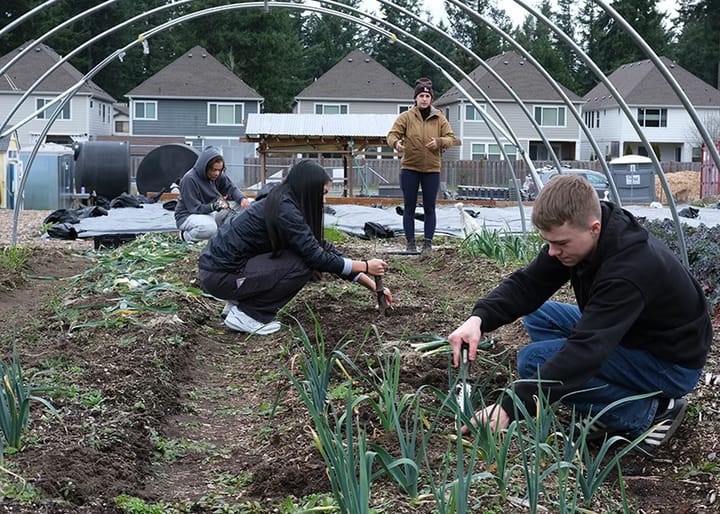
— Image courtesy of the Washington State Department of Agriculture.